
Research Infrastructure
Research devices
EEG and fNIRS Brain Monitoring Devices
The infrastructure provides access to equipment and analyzes human brain activity. Two main non-invasive methods that are commonly used are EEG and fNIRS based devices that monitor and record signals originated from brain activity.
- Electroencephalography (EEG): records electrical activity from the surface of the scalp using electrodes. EEG offers information about the timing of brain processes and has been used in research for studying attention, perception and basic cognitive responses.
- Functional Near-infrared Spectroscopy (fNIRS): measures changes in blood oxygenation and flow in specific brain regions by detecting variations in oxygenated and deoxygenated hemoglobin. This method provides spatial information about brain activity and can be applied in both laboratory and field settings.
Currently the following devices are available within the infrastructure and can be accessed for research activities:
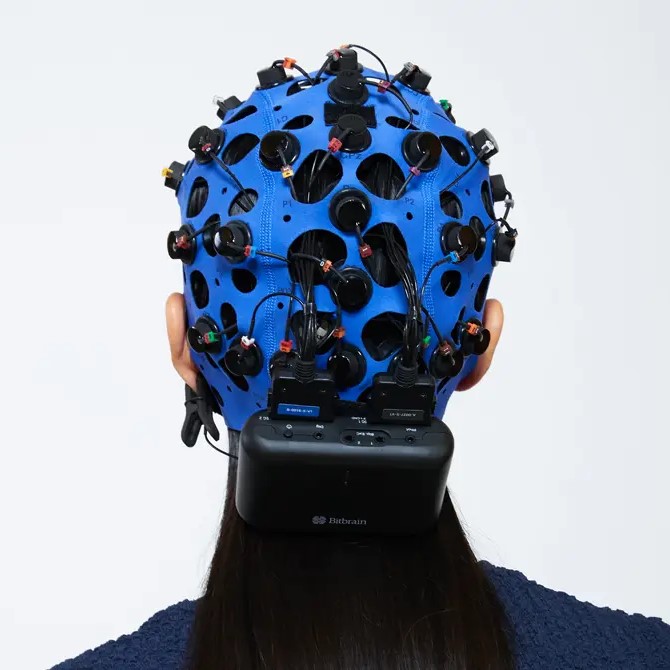
Bitbrain
Versatile EEG
Three water-based EEG caps in 16-channels configurations for real-time brain activity recording. They use water-based electrodes that can be placed according to standard layouts, allowing quick setup without gels and use in both laboratory and mobile research settings.
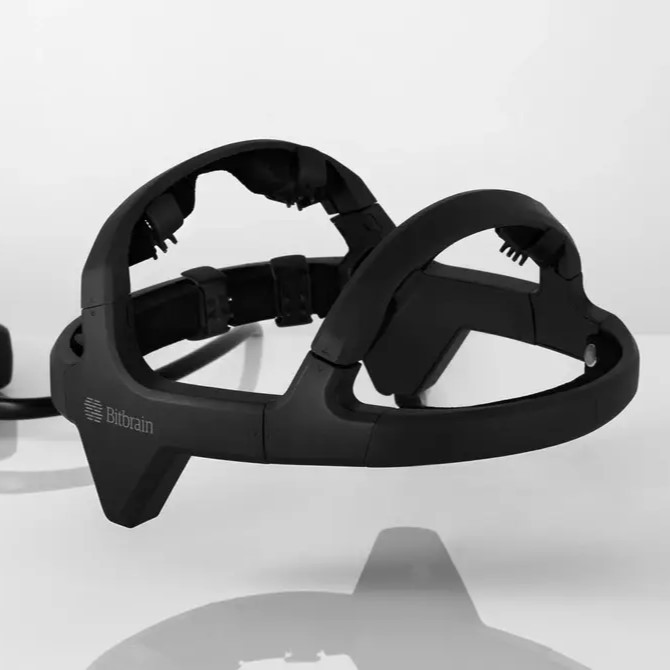
Bitbrain
Diadem Dry EEG
Two portable EEG headsets with 12 dry electrodes positioned over certain brain areas for recording electrical brain activity. Can be quickly fitted by the user and integrates with common software tools for data acquisition and analysis, allowing use in both laboratory and everyday environments.
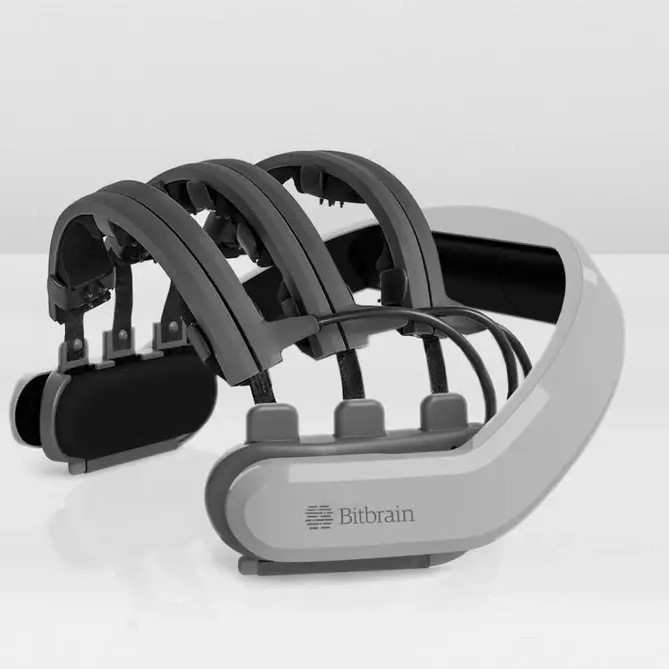
Bitbrain
Hero Dry EEG
One portable dry-EEG system with 9 electrodes positioned over fronto-central, central and centro-parietal brain areas. It can be setup quickly and used in both laboratory and everyday environments, allowing for recordings suitable for studies on cognitive and sensorimotor activity.
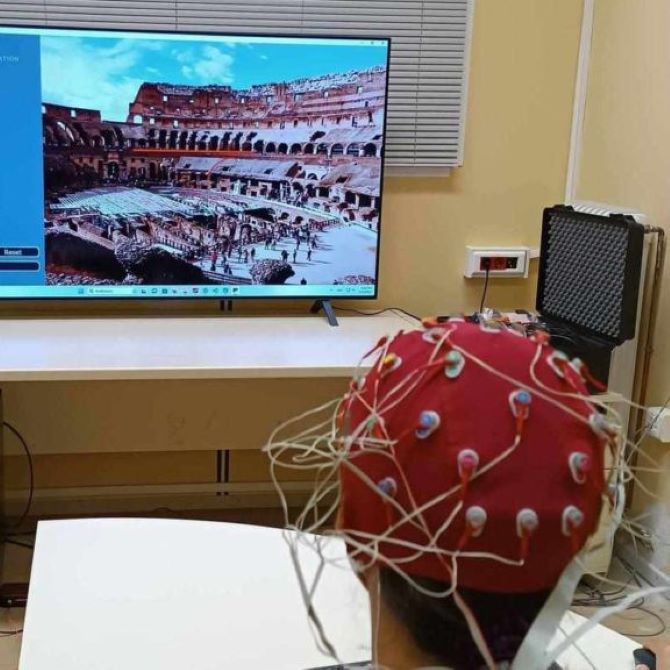
Biosemi
ActiveTwo EEG
In a 32-channel configuration, a gel-based EEG system with electrodes arranged according to the International 10-20 layout. It provides high-resolution recordings for EEG, ECG and EMG studies and is intented for use in laboratory environments, where stable conditions and controlled setup can ensure signal quality.

Artinis
BRITE MKIII fNIRS
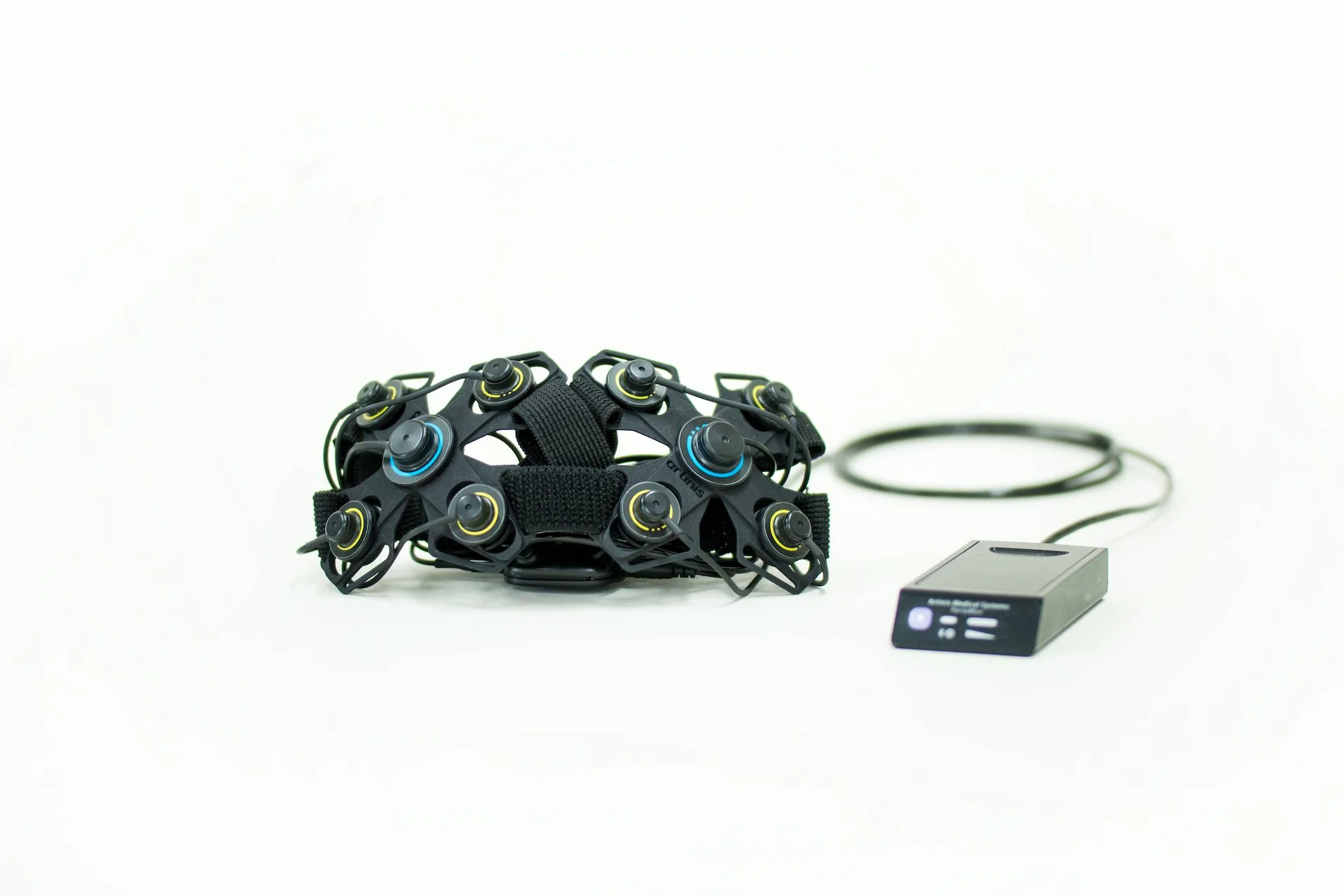
The Artinis Brite MKIII is a lightweight, wireless, and flexible multi-channel fNIRS device for measuring brain oxygenation through changes in oxy-, deoxy-, and total hemoglobin. It offers customizable optode layouts, adjustable interoptode distances, and multi-power gain control for optimal signal quality across participants.
Artinis
OctaMon fNIRS
The Artinis OctaMon is a completely wearable, 8-channel functional near-infrared spectroscopy (fNIRS) system designed for non-invasive monitoring of brain oxygenation. It is optimized for prefrontal measurements and supports mobile data acquisition both inside and outside laboratory environments.
Research Facilities
Brain-Computer Interaction and eXtended Reality Research Room
Experimental Laboratory
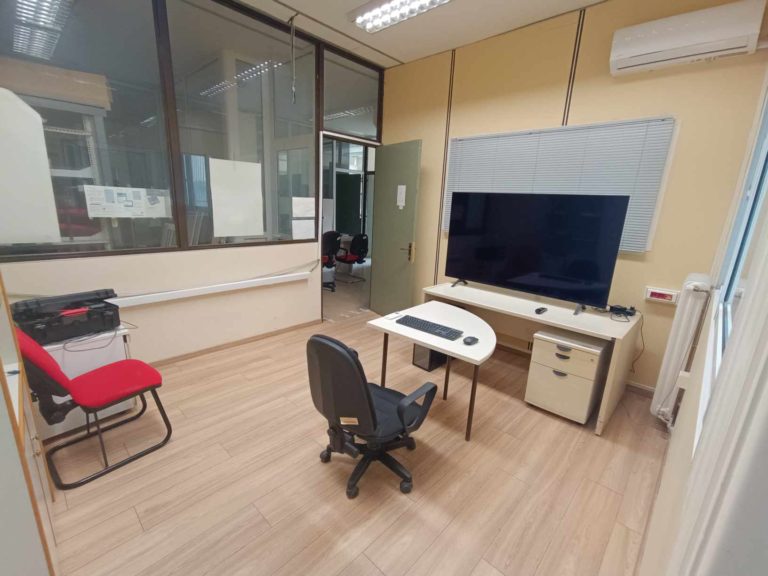
The experimental laboratory room provides a controlled enviromnet for conducting user and neurophysiological experiments. It includes a preparation room for pre- and post-experiment briefings, a monitoring room where researchers can observe the sessions in real time, and workstations equipped for data collection and analysis. The setup supports both individual and group studies, allowing flexible use depending on research needs.
Combined use with Eye-Tracking and XR Devices
Research activities can combine multiple sources of data to study human behavior and cognition. Brain signals recorded through EEG and fNIRS can be synchronized with eye-tracking data to examine visual attention and perception. These measurements can also be collected while participants interact within immersive environments across the spectrum of Extended Reality (XR), allowing controlled yet realistic study conditions.
In addition to the equipment included in the research infrastructure, the Interactive Technologies Lab maintains its own set of eye-tracking systems and XR headsets that can complement the available resources. These devices can be used in coordination with the infrastructure’s equipment when research needs require integrated studies involving gaze tracking or immersive environments.
Eye-tracking Apparatus
Eye-tracker: Pupil Core
A head-mounted eye-tracking system that records gaze position, pupil size, and scene video using infrared cameras and open-source software. It allows customizable data collection and integration with other physiological sensors or behavioral measurements.
Pupil Lab’s Neon
A wearable eye-tracking platform with modular cameras and a processing unit that enables real-time gaze tracking and scene recording. It is designed for mobile use and can interface with external systems for synchronized multimodal data acquisition.
Tobii Pro Glasses 2
A mobile eye-tracking device with four inward-facing eye cameras and a wide-angle scene camera, providing precise gaze estimation in naturalistic tasks. Data can be streamed or recorded for post-analysis of attention and visual behavior.
eXtended Reality Devices

Meta Quest 3
The Meta Quest 3 is a standalone mixed-reality headset that combines high-resolution pancake-lens displays with full-color passthrough for immersive virtual and augmented reality experiences. It supports interaction through hand and controller tracking. The lab has three devices that allow for the development and evaluation of mixed-reality applications, enabling studies on spatial perception, interaction techniques, and immersive user experiences.
HoloLens 2
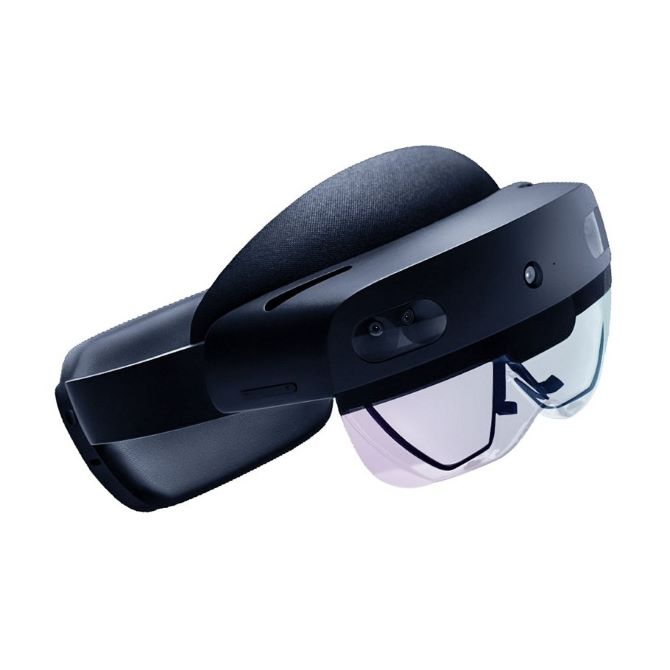
A mixed reality headset equipped with depth sensors, hand and eye-tracking, and spatial mapping capabilities. It supports the display of 3D holographic content in real environments and can be used for interaction studies and spatial task evaluation.
Hololens 1
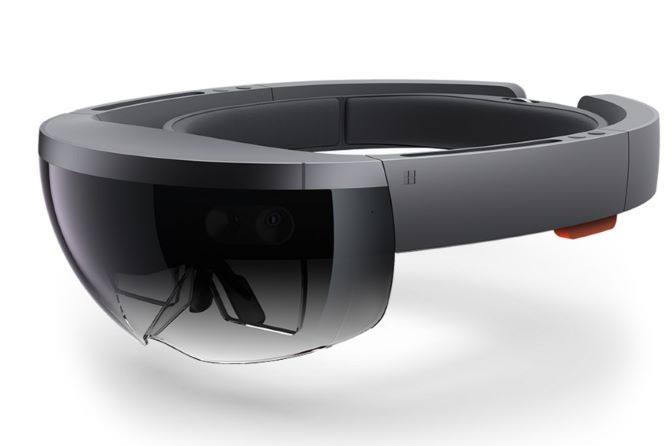
A standalone mixed reality device that combines spatial mapping and basic gesture recognition. It provides see-through augmented overlays within the user’s environment for experimental use in controlled or semi-controlled settings.

Magic Leap 2
High Performance Computing
AI Infrastructure
The Interactive Technologies Lab hosts a dedicated AI infrastructure designed to support demanding computational requirements, including large-scale data analysis, machine learning, low-latency decoding, and adaptive feedback algorithms in areas such as gaming, neuromarketing, and neurosecurity. At the core of this infrastructure is the “Typhon” system, which is already operational and provides cutting-edge computational power based on four next-generation Ada Lovelace GPUs, with a total GPU memory capacity of 192 GB. The system employs single-phase immersion cooling technology, ensuring high efficiency, reliability, and sustained performance while maintaining a low energy footprint. Typhon is already running in production and supports the deployment and operation of advanced AI models, with approximately 150 GB of model data distributed across the four GPUs. The GPU infrastructure is also planned for near-term expansion through the addition of further GPUs, increasing the total GPU memory capacity to approximately 600 GB. This expansion will significantly enhance the system’s capability to support larger AI models, more demanding computational workloads, and real-time or low-latency intelligent applications.


