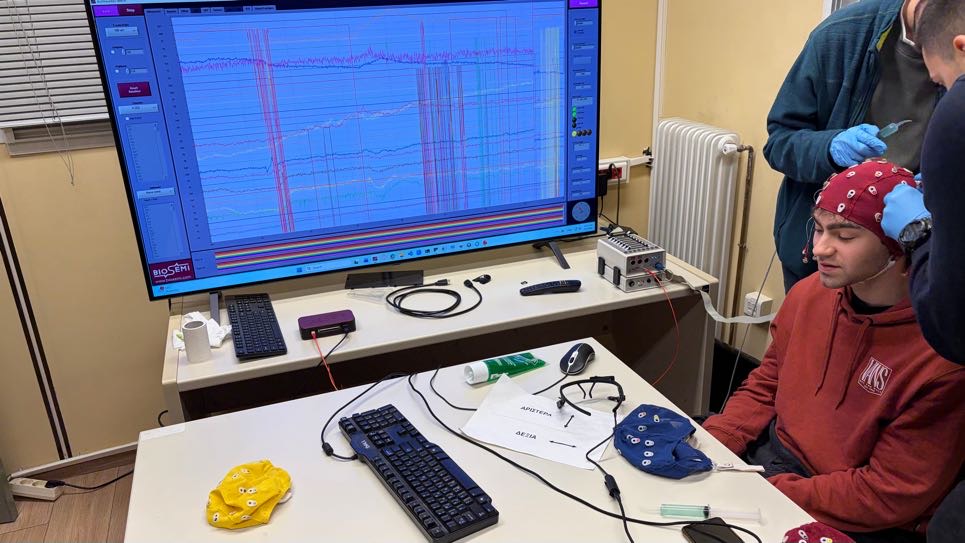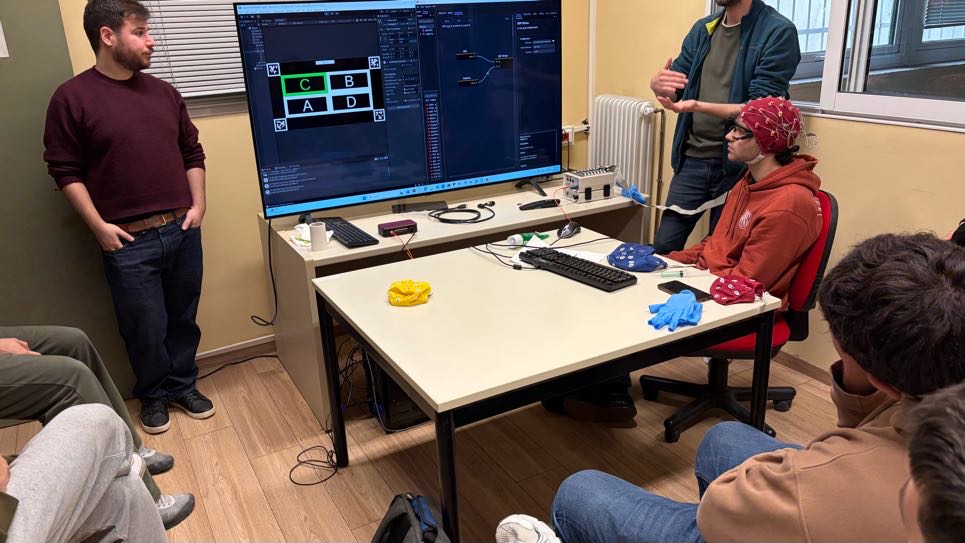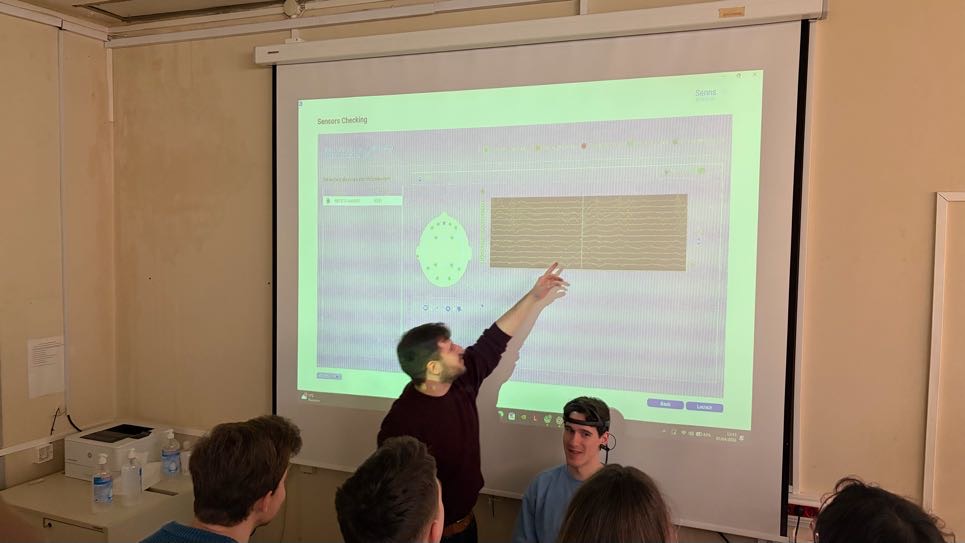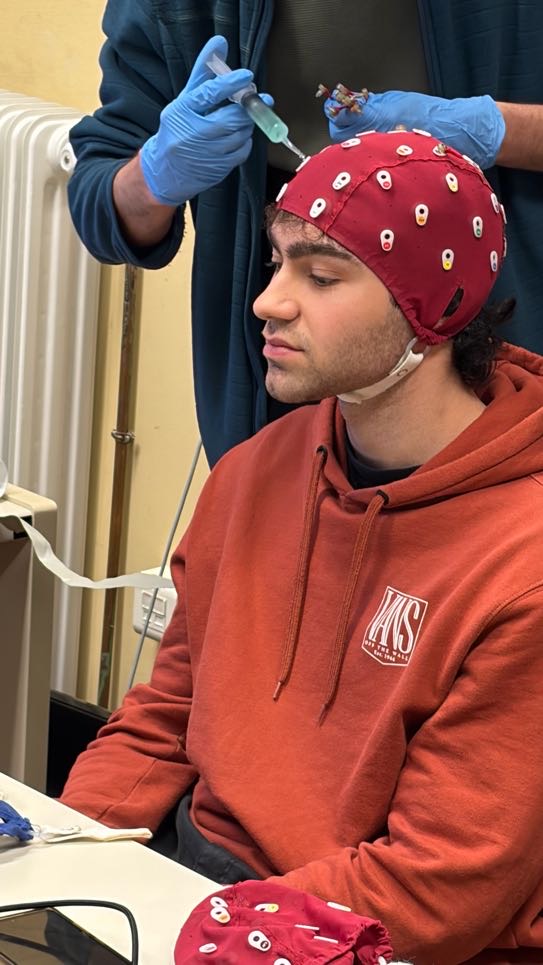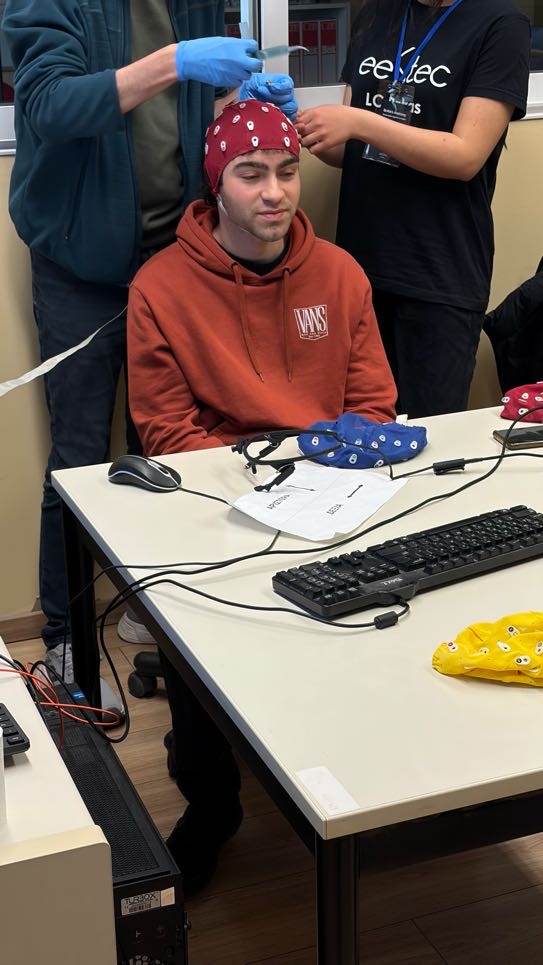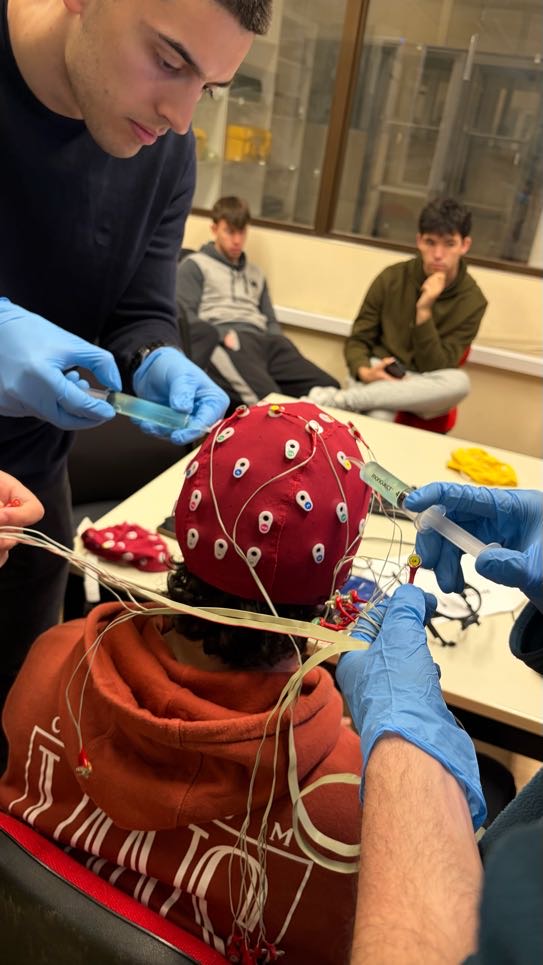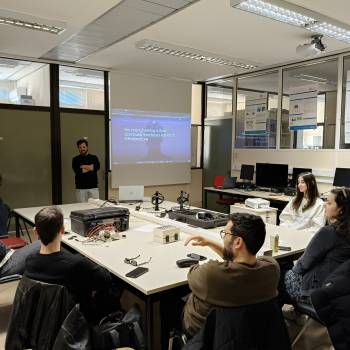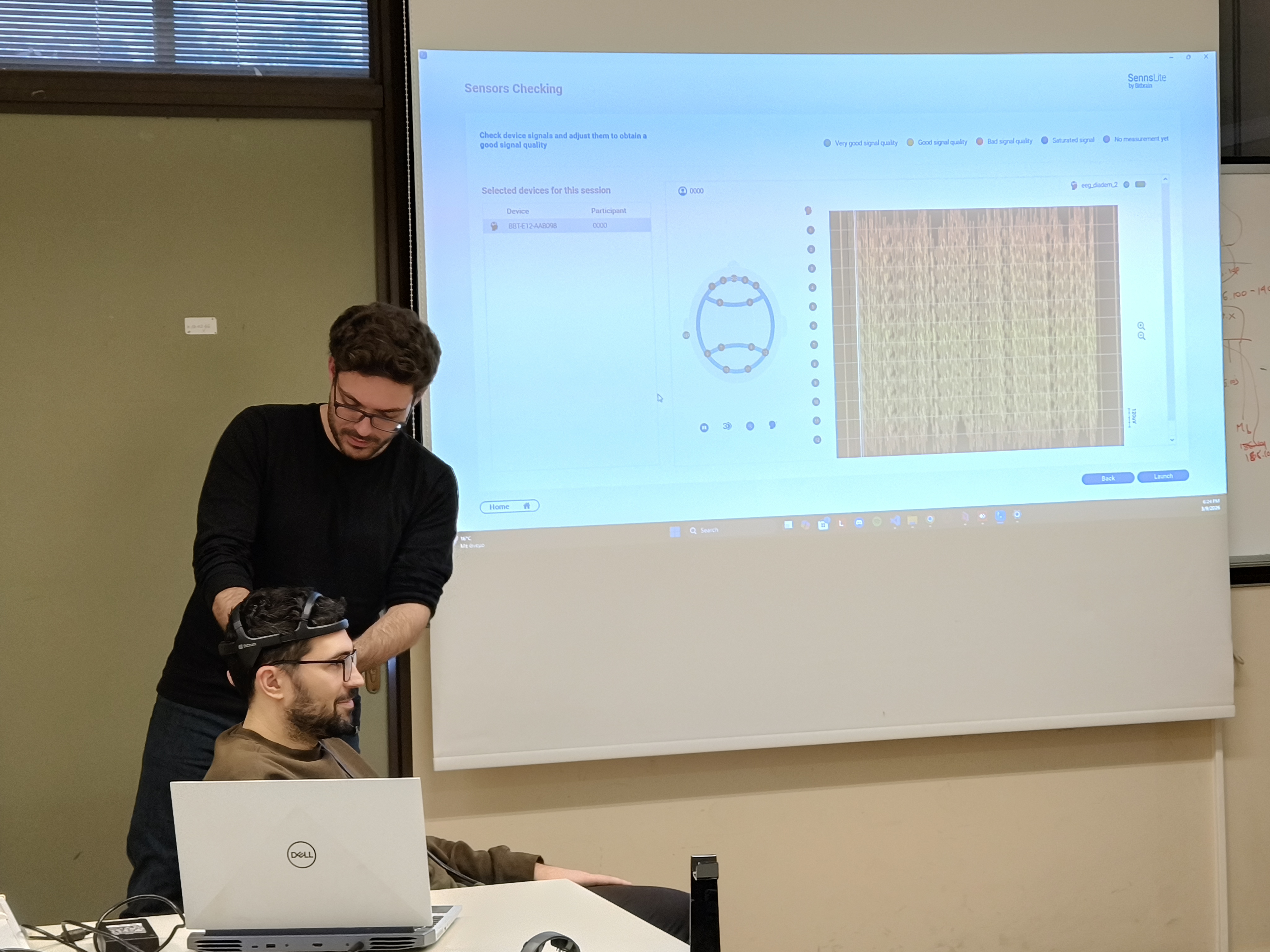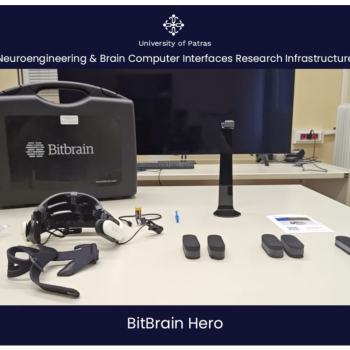

From March 29th to April 3rd, Brain Computer Interface Research Infrastructure successfully hosted the international workshop “BrAIn's Anatomy: From Brain Signals to Insight”, organized by EESTEC LC Patras. Bringing together 11 participants from universities across Europe and 9 local students for an immersive journey into Brain–Computer Interface (BCI) technology, the workshop combined theory, hands-on experience, and meaningful discussions around the rapidly evolving field of neurotechnology.
Participants were introduced to the full pipeline of brain signal processing — from acquisition to interpretation — through:
▪ Neural data fundamentals and EEG signal analysis
▪ Signal processing and visualization techniques
▪ AI & Machine Learning applications in brain data
▪ Ethical and societal implications of neurotechnology
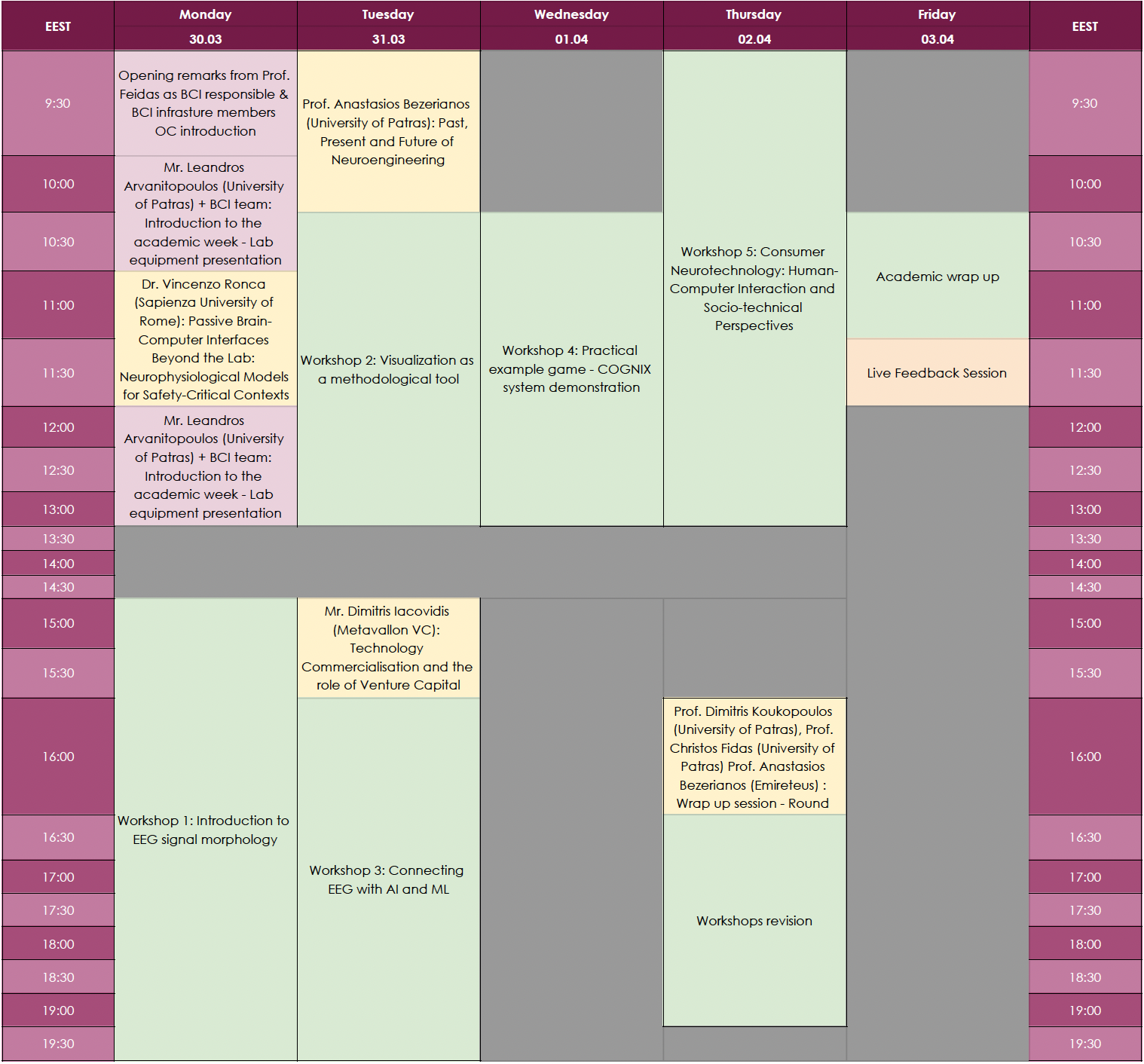
The workshop kicked off with engaging lectures from distinguished experts including Vincenzo Ronca (Sapienza University of Rome), ANASTASIOS BEZERIANOS (University of Patras), and Demetris Iacovides (Metavallon VC). Their insights into neurotechnology, brain signal acquisition, and real-world BCI applications set the tone for an impactful week.
Participants actively engaged in interactive sessions on #EEG morphology, visualization methods, and AI integration. Through practical experiments students worked directly with brain signals, applying their engineering skills to real-time data and gaining firsthand experience with BCI systems.
Beyond the technical knowledge, the workshop fostered a vibrant international environment where students exchanged ideas, collaborated across cultures, and built lasting connections.
On the final day, a round table discussion brought together participants and organizers to reflect on key learnings, discuss the future of neurotechnology, and share perspectives on challenges and opportunities in the field. It was a fitting conclusion to a week filled with curiosity, innovation, and collaboration.
As part of our mission, this workshop highlighted the power of interdisciplinary learning and international cooperation in shaping the engineers of tomorrow.